What Is Color Fastness? A Comprehensive Review of Its Types and Importance in the Textile Industry
When it comes to the quality of fabric, clothing, or any textile product, color fastness is a crucial criterion. While many customers may not be familiar with the term “color fastness,” everyone has experienced—at some point—a newly purchased garment fading after a few washes, bleeding color onto other clothes, or changing appearance due to sunlight exposure.
Simply put, color fastness refers to a fabric’s ability to retain its color when exposed to external factors such as washing, light, abrasion, perspiration, water, heat, and so on. A fabric with high color fastness maintains its hue even under harsh conditions, ensuring its visual quality does not deteriorate.
Why is color stability important?
Color fastness is not merely a technical attribute; it is a key criterion for customer trust in a brand and its products. In the apparel, furniture, home textile, and even hospital fabric industries, high color fastness signifies:
Extended product lifespan
Preservation of the fabric’s aesthetic appeal
Reduced replacement costs
Customer satisfaction and increased sales
Compliance with global export standards
As a company specializing in textiles, Kimia Nassaj fully recognizes the importance of these factors and bases all its production processes on color quality and product durability.
Types of color fastness
When asking what color fastness is, it is important to understand that it is not a single concept but is measured in various forms. Below, we examine the most important types of color fastness.
1. Color Fastness to Washing
Color fastness to washing refers to the fabric’s ability to retain its color—and not transfer it to other fabrics—when exposed to water, detergents, and varying temperatures during washing.
This property is critically important for everyday clothing, children’s wear, uniforms, and home textiles. Global standards, such as ISO 105-C06, have been established for it.
2. Color fastness to light (Light Fastness)
Some fabrics undergo color changes or fading due to exposure to sunlight or artificial light.
Curtain fabrics, upholstery, and outdoor textiles require a very high level of color fastness to light. Tests are typically conducted in accordance with the ISO 105-B02 standard.
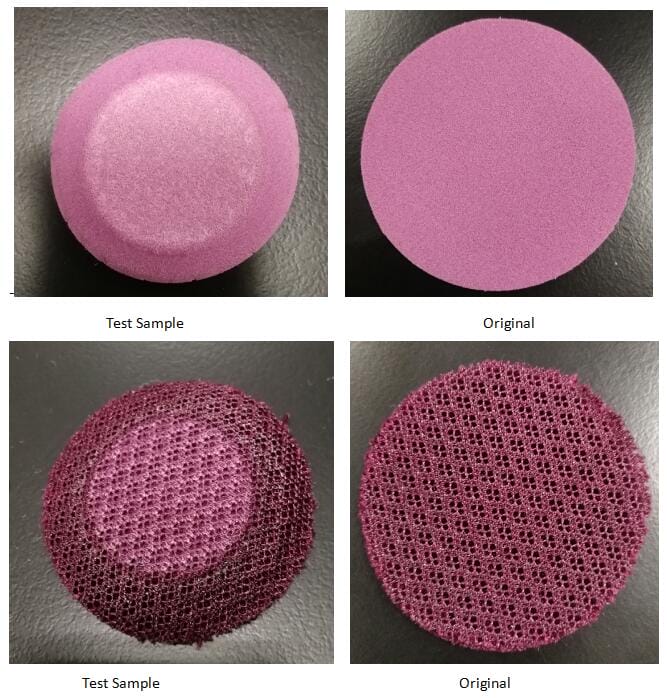
3. Rubbing/Abrasion Fastness
Fabrics subject to frequent contact or friction—such as trousers, workwear, and upholstery—require color fastness to rubbing.
In such cases, the color may transfer to another surface due to rubbing, or the fabric surface may abrade, causing the color to wear off.
4. Color Fastness to Perspiration
Sweat is a mixture of acidic and alkaline substances that breaks down dyes upon contact with fabric.
Sportswear, T-shirts, and workwear must possess high color fastness against sweat to prevent discoloration in areas that come into contact with the skin.
5. Color Fastness to Water, Rain, or Humidity
Outer fabrics and waterproof or water-repellent garments must maintain color stability upon contact with water.
If this stability is low, the dye may bleed into the surrounding environment or cause color stains to form on the fabric.
Factors affecting color stability
To understand what color fastness is, we must identify the factors that influence it. Color fastness is the result of a complex interaction between the fibers, the type of dye, the dyeing method, and post-dyeing conditions.
1. Fiber type
Each fiber behaves differently towards dye:
Cotton forms chemical bonds with reactive dyes and exhibits good colorfastness when processed correctly.
Polyester is best dyed with disperse dyes and offers high lightfastness.
Wool and silk readily absorb acid and metal-complex dyes but are more sensitive to perspiration.
2. Paint type
Choosing the right dye for each type of fiber is crucial:
Reactive dyes for cellulosic fibers such as cotton
Disperse dyes for synthetic fibers such as polyester
Acid dyes for protein fibers such as wool and silk
3. Dyeing Method and Conditions
If errors occur regarding temperature, pH, time, or dye concentration, color fastness will be poor. Even minor precision in the dosing of materials makes a significant difference.
4. Finishing operations
Following the dyeing process, thorough washing, as well as the use of fixing agents and softeners, play a crucial role.
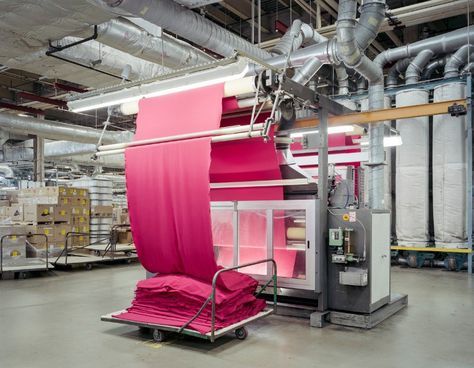
Kimia Nassaj Company controls color quality from the dyeing stage through to finishing, utilizing industrial equipment and standardized formulations.
How is color fastness tested?
To understand what color fastness is from a scientific perspective, we must be familiar with the standard tests used to measure it.
1. (Launderometer)
This device subjects the fabric to conditions similar to washing with detergents, and the results are recorded according to the standard.
2. (Xenon Test)
The fabric is exposed to intense light to determine the extent of color fading under natural light.
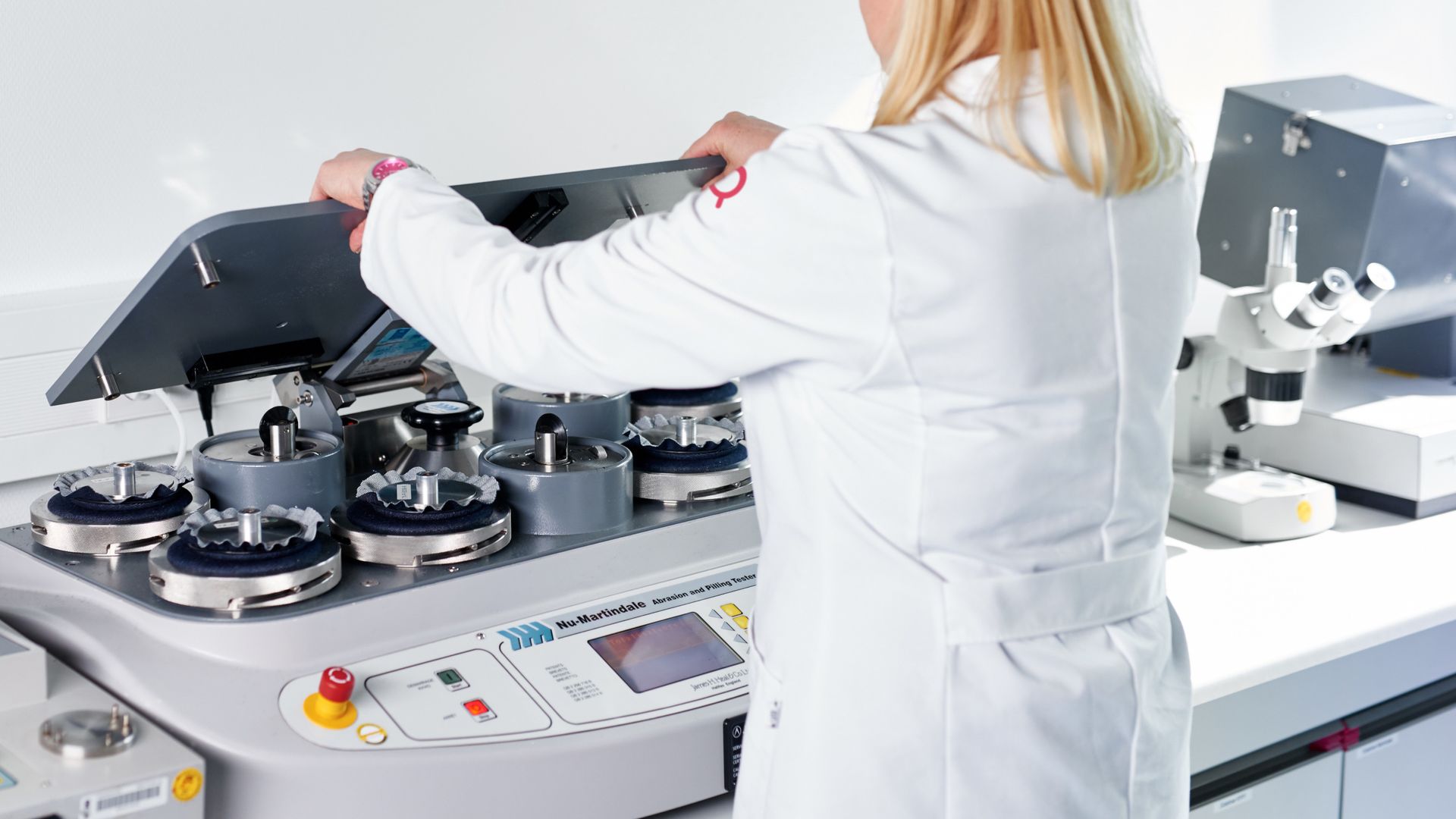
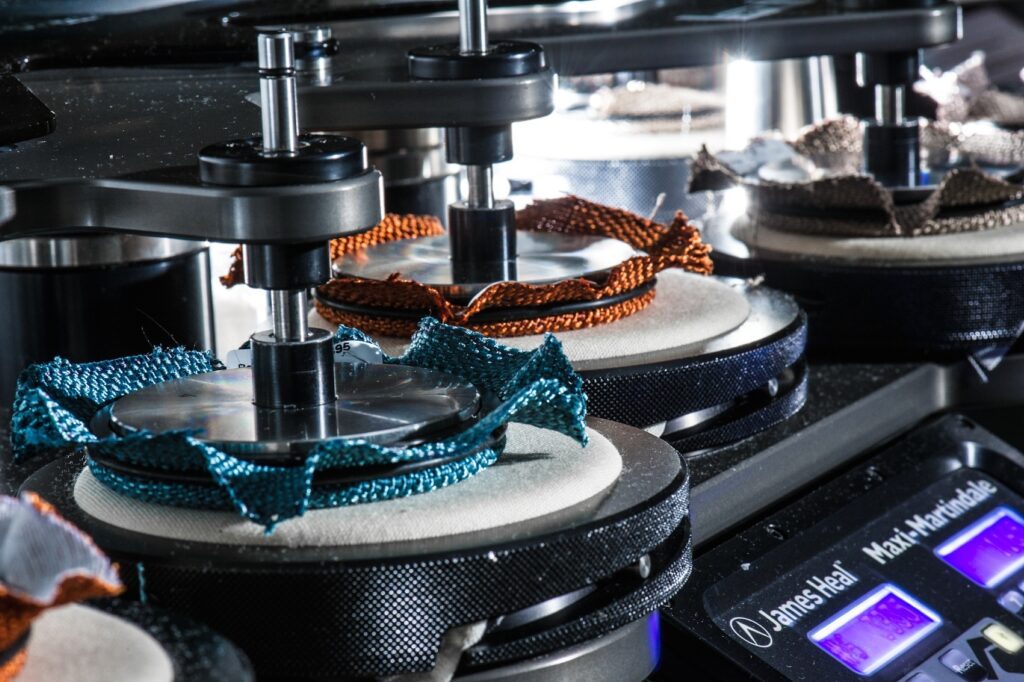
3. (Martindale)
The Martindale apparatus measures the degree of color transfer caused by rubbing or friction.
4. (Light Cabinet)
Using optical standards, expert operators compare visual color variations against a reference sample.
Strategies for Enhancing Color Stability
For companies like Kimia Nassaj, a precise understanding of color fastness means implementing best practices in the production process.
✔ Choosing the right color
Each fiber requires its own specific dye. Using the wrong dyes leads to color bleeding and fading.
✔ Temperature and pH control
In the industrial dyeing process, precise temperature and pH conditions are crucial.
✔ Post-dyeing operations
Thorough washing, chemical fixation, and specialized softeners enhance color durability.
✔ Use of standard equipment
Well-equipped laboratories, such as the one used at Kimia Nassaj, guarantee production quality.
Color Stability and Customer Choice
When a consumer is unfamiliar with the concept of colorfastness, their only point of reference is an unpleasant experience: a new garment that bleeds color, curtains that fade after months of sun exposure, or upholstery that develops white spots due to friction.
Therefore, manufacturers must ensure colorfastness before bringing a product to market.
Conclusion
Colorfastness refers to a fabric’s resistance to environmental factors such as light, washing, abrasion, perspiration, and water.
This quality is achieved through the selection of appropriate dyes, controlled dyeing processes, the use of standard equipment, and rigorous testing.
At reputable companies like Kimia Nassaj, colorfastness is not merely a technical specification; it is a fundamental principle of production and a mark of respect for the customer.